What Can we Learn from Arcosanti – World’s First Prototype Arcology
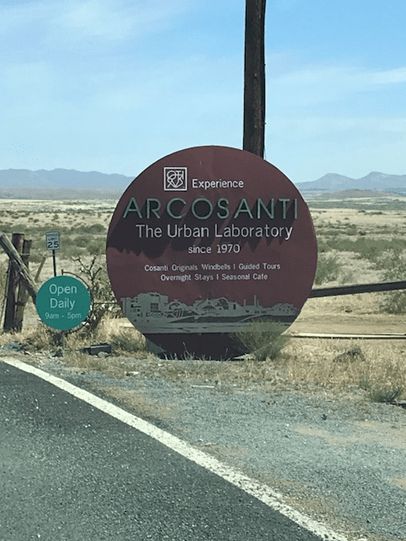
As I was traveling down the gravel road with Sonoran scrub on either side to Arcosanti, I could not help but wonder what this Urban Experimental Community was going to really look like. I had been studying the concept of Sense of Community for many years and was excited to see how this concept of blending architecture with ecology could develop a sustainable, living community. The gravel road provided a sustainable entrance to this fascinating prototype in Arcology. You are wondering what this new age urbanism word means. Arcology is the blending of ecology and architecture. Arcosanti was the vision of architect Paolo Soleri who build a living community where people lived, grew their food, and worked within the community to produce sustainable income. It was a community that was in balance with nature.
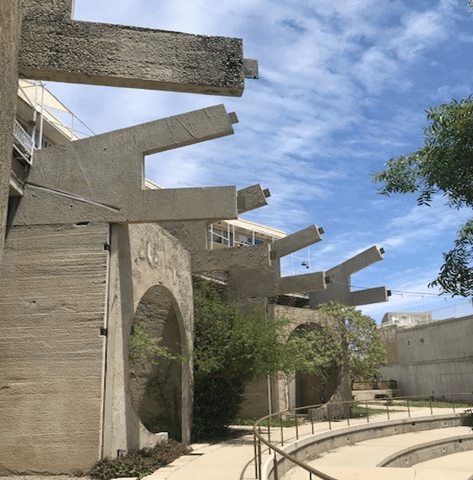
As I bended the corner to Arcosanti, I started to see concrete buildings (very sustainable) growing out of the earth.
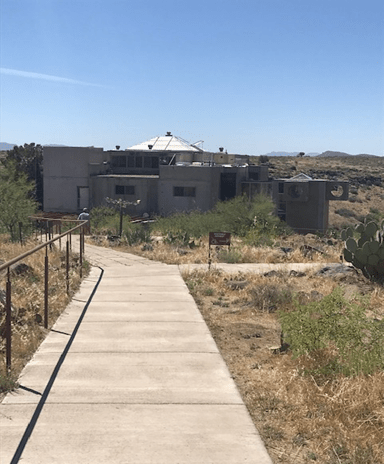
Soleri’s concept of a living city, is the true essence of building a sense of community. Soleri’s premise, is that a community is a living organic system that provides, shelter, food, job, and inclusion and evolves organically to fulfil the personal needs of each member and the community. By providing opportunities to all of its members, each member develops a keen sense of community. This comprehensive sense of community ensures that people become rooted by enforcing community engagement in all aspects of a person’s life from growing food, to having shelter, to sharing food, and to generating income. I was fascinated to understand how people came to find Arcosanti and how they adapted to living here full-time.
The construction of Arcosanti began in 1970 as an experimental learning environment to build a sustainable community that supported itself and its inhabitants. My fascination with visiting this center was to understand how building this level of Sense of Community fulfilled the personal needs of its resident, how people developed an emotional connection to the community and each other, and how people felt inclined to influence the direction of the community. I was curious to know if the people who lived here felt content or if they felt confined and missed living outside of the living laboratory? I was curious to know if the residents of Arcosanti increased their self-sufficiency, their self-esteem, rootedness, and overall quality of life. Were there lessons within this urban living environment that we could learn and better house vulnerable populations?
The living laboratory, as they like to refer to the community houses about seventy full-time people. Many volunteers come to Arcosanti on periodic intervals to support various aspects of this living community, such as farming and the primary income producing bronze and ceramic wind bells, and some have lived there for several years.
The concept at Arcosanti has sound principles that are important to evaluate as we look for ways in which to help people sustain their housing and improve their quality of life and improve their sense of community. The concept of being food stable and growing enough food for community consumption seems out of reach, but it really is within reach when it is a major component of the community. When the community supports farming and this is someone’s job, the food burden is shared by the entire community and does not become an individual burden. The residents within Arcosanti, whether full-time or ad hoc, have defined roles and responsibilities which allows them to be engaged and rooted in the success of the community.
The major income producing portion of the community, is the design and production of copper and ceramic wind chimes, and vessels. A domed bronze and ceramic apse was built for the design and production of each piece. Artisans come from around the world to apprentice at the bronze foundry and ceramic apse.
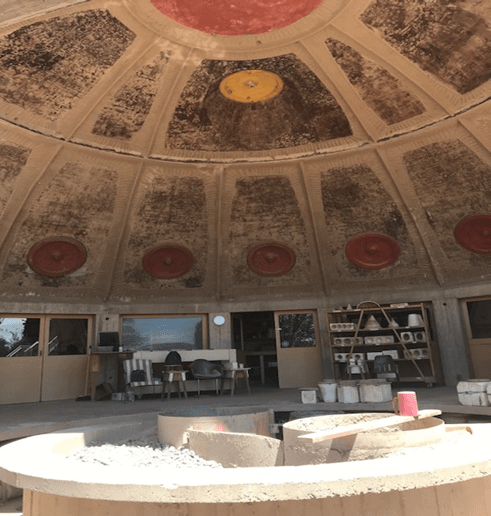
A trip to Arcosanti (which is about 1 hour outside of Phoenix), gave me pause to reflect if this type of integrated community can provide the sense of community that allows people to engage in a different type of opportunity that supports a place to live, work and play. Communal areas are central to the community and serve as social spaces for community engagement. Can this focus on a community as a living organism, provide options to building more resilient and sustainable communities?
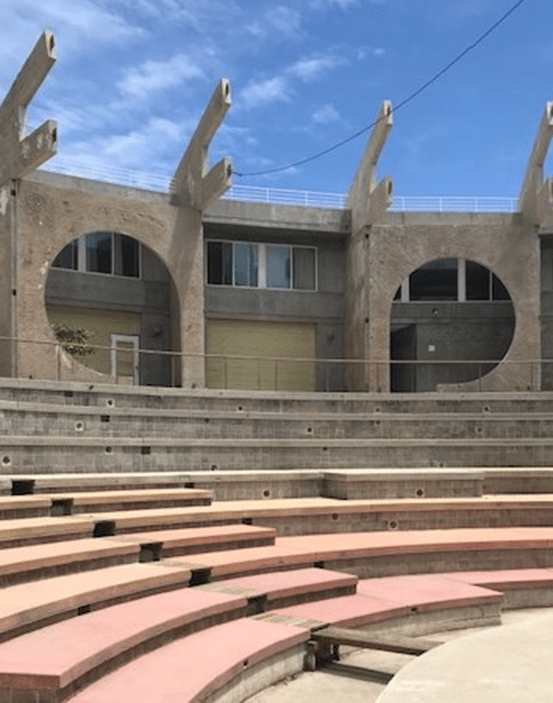
Arcosanti is worth a visit where you can tour this urban laboratory which provides an innovative opportunity for building communities of the next century. With a community where you walk downstairs to work in a team, where you grow your own food, and where you share the day’s stories in a community dinner, there are aspects to Arcosanti that are very appealing. I agree that at the fullest extent, this may not be the literal solution to building a sense of community, but there are aspects such as job fulfilment, needs fulfilment and emotional attachment that provide some innovative ideas for improving quality of life.
You can visit the Arcosanti web page (www.arcosanti.org) for additional information and tours. You can even visit overnight, where you can be fully emersed in the urban philosophy of arcology. As I continue my research on building A Sense of Community, I hope to visit Arcosanti again and learn more from the residents about the benefits of this learning environment where architecture meets ecology. Arcosanti is a unique establishment that supports a resilient and equitable community. We can learn from this learning environment on how to improve our concept of building communities and possibly enhance the ability of its residents to build a better and enhanced Sense of Community.
 Donna Wickes